Sunday, 26 March 2023

Look in the right place

 Any localized place information you have is probably the best clue you will ever get.


Someone contacted me recently for help. An ancestor of his had been attached to the wrong family on the FamilySearch tree. He needed to identify the actual parents and provide proof so others would stop perpetuating the mistake. I looked at the family group and instantly understood what he was getting at: the attached parent couple was well documented living over 200 km/ 150 miles as the crow flies (and maybe twice that by the land routes of the time), from the somewhat isolated Ontario township where his own ancestor was known to be living. While both families were definitely in Ontario, another researcher, probably without much understanding of Ontario geography, assumed incorrectly that meant they were in close proximity.

Ontario is easily twice the size of most major European countries. You could basically fit both Texas and California into Ontario. While Ontario historically did not have the population density of a European country, actual physical distances still matter. In the early days, distance mattered quite a bit.

Knowing the surname and which township the actual parents must have been living in provided the key starting point to solving this problem. A digital index revealed one person with that surname who had letters left at the post office servicing the township in the 1820s. Further searches revealed there were absolutely no vital or church records existing for this person. However, given the township, that is not really surprising if he died before 1861 (generally the 1851 censuses survive in Ontario, but not for this place). The church and burial record survival for this area is known to be poor. 

Further searching identified six other people with the right surname who researchers associated with this township, potentially siblings of the target brick wall. However, two of those people were revealed to be incorrectly assigned to the township and, once their authentic locations were identified using vital and census records, a bit of further research identified their parents and actual family units. That still left four potential siblings. A noticeable commonality between these five people was their longevity. This proved to be a disadvantage because when they died in their late 80s and 90s, the grandchildren and in-laws who reported the deaths did not know the names of their parents. It was becoming clear why these people had endured as brick walls in so many trees. 

While initial searches revealed there was no handy family surname file of clippings and 19th or 20th-century research from incidental sources, such files did exist for two families the potential siblings had married into. These files, in the ever-useful Herbert Clarence Burleigh fonds at Queens University (scanned on Internet Archive), contained crucial sketched family trees and one mysterious typed manuscript genealogy. 

Both files indicated all five people under investigation were siblings, and they were indeed children of the tardy letter collector. And, crucially, their mother proved to be the daughter of a well-documented Loyalist. The extensive typed genealogy included tantalizing references to information from 17th or 18th-century Dutch bibles and phrasing indicated information collected from living descendants, although it was not clear when these activities occurred and specifically who initiated it.

Following up on a reference to one bible-owner, who had a very rare surname, further untangled the situation and revealed that the typescript was a partial copy of an article series that appeared in the New York Genealogical and Biographical Record in 1882 and 1890. The original article (accessible via Google Books and FamilySearch) revealed the NY-based author had solicited descendancy information for a notable NY Dutch family. Given the intermarriages and the author's willingness to include female descendant lines when known, this had captured two elusive brick-walled families in the isolated Ontario township and a related brick-walled family in Ohio. 

The information was only recorded because the 1880s researcher's mail campaign reached two unmarried siblings born in the 1820s who still lived on the original Ontario family farm. They responded with everything they knew and then both died in 1891.

With such treasured information in hand, I corrected the initial mistaken parentage and set about fixing other indicated mistakes on the FamilySearch tree. I always hesitate to disconnect an assigned child unless I have reasonable evidence the link is wrong and when doing so, I try to reassign the child to correct parents in order to avoid disappointing any descendants.

When I hit one such case, a person found on the tree, but not in the published genealogy, I instantly understood why the (probably erroneous) connection had been made. One of the children had been given as their first name, the somewhat unusual Dutch surname of their currently assigned grandmother. I can imagine the researcher's enthusiasm in making this connection (surely this is good circumstantial evidence!). However, in reviewing and further assembling the census records for this family it became apparent that the birthplace for the person incorrectly attached to the Ontario family was not in 1820 "Canada" as listed in the profile (although his wife was Canadian), it was, per the 1875 NY state census, Herkimer County NY.

Within five minutes of investigating the limited number of appropriately surnamed families in Herkimer in the 1820s, I found another couple, married in Herkimer in 1807 ... and the wife had the same somewhat unusual Dutch surname ultimately bequeathed to her grandson. By coincidence, two such couples existed at roughly the same time, one in Ontario and one in New York.

The researcher who made the incorrect association would have found this other couple before ever looking at the Canadian family, if they had just been looking in the right place.


Sunday, 30 October 2022

Burials hold the final clues...

... but you may need to research an entire cemetery to find them all.

A few years ago, two teenagers managed to inflict at least $150,000 in damage to an ancestral burial ground I am very fond of. It is a rural garden cemetery set in a picturesque hilly landscape. When I first visited years prior, I was fortunate to see the cemetery before more recent severe weather events damaged many of the large old trees. I imagine the cemetery board had a lot of maintenance costs and headaches on their plate even before the vandals arrived.

When news began to trickle out about havoc at this peaceful place, I sat at my computer thinking: I am far away, what can I do? I had already added hundreds of memorials for the cemetery to FindAGrave (as had several others)  the majority of people buried there are probably at least my fourth cousins  but there were still many thousand memorials unlisted, including most of the 200 or so damaged monuments. I did have several datasets for the cemetery at my fingertips, as well as photos taken on previous trips, so I created profiles for the damaged stones.

Once those were in, I kept going.

It took a couple of weeks but within the month, I had ensured that everybody buried in this cemetery had at least an online memorial with their basic vital information and plot location, no matter the current condition of their marker. Given FindAGrave is indexed directly to Ancestry and FamilySearch, this will bring these burials to the attention of descendants who don't already know they are there. And, the plot location information would later prove extremely useful.

I was a bit worried about managing ten thousand FindAGrave memorials. Would it be an administrative burden? Typically only a handful of edit requests come in every few days. Mostly I was hoping that relatives would request that I transfer the memorials to them and these requests do arrive in a slow trickle. 

However, I am responsible for the thousands of memorials I seem destined to manage for some years. Basic birth and death year information is good but is not enough to tell a story. The narrative of community and family that our cemeteries preserve is only revealed when relationships between people and the places they have known, as well as historical events, are made clear. At the beginning, I figured doing comprehensive research on an average of three people a day would cover everyone buried in this graveyard in ten years. They would have a stable, internet-permanent, memorial of their lives and connections that no misbehaving adolescent could destroy. While I haven't checked my progress very thoroughly, I am about half way through this project and it has yielded some interesting benefits.

With the plot data in, the ability to quickly identify groups of people buried in the same plots and then research those connections using the standard databases really increased the authority, quality and completeness of the memorial profiles I could produce. Proximity of burials to each other, in the absence of other documentation, provides very strong inferential evidence. 

To some extent this is also true for people buried within the cemetery as a whole, and I often link up networks of twenty or thirty people within the cemetery once I start working on the one or two memorials that have new edit requests. Unmarried people, apparent 'strays' to the community and people with very common names have all been correctly identified and biographied once their presence in the family plot revealed the crucial evidence about who they actually were. 

I prioritize which memorials to work on based on edit requests I receive and photo requests for the cemetery as a whole, and this is a nice unsystematic system that rarely feels like a burden. I don't have an obligatory list of things to do on a fixed timeline and typically only login when I have some time to spare and boredom to cure, and in each case it seems like I am helping someone crack a mystery.

Burial proximity can also provide the logical evidence needed to exclude inaccurate relationships. A few edit requests did not add up because it was clear the persons involved could not have been, say, married, given that the person I managed was buried next to their spouse (as identified on the gravestone or by the burial register) and the date arrangements didn't work. Often, I could use local knowledge to point the other researcher to the correct burial elsewhere and thereby untangled incorrect death registration attributions (which can easily happen for Ontario records during the period when parents and spouses were not listed and many cousins with similar names and dates lived in this community).

I have some brick walls associated with families in this cemetery and I suppose in the back of my mind I am hoping one day I will research a family and some fact will arise and there will be the ah-hah! moment where it all slots together. Some of the thousands of edits I've done generated those breakthroughs for other people. For me, it hasn't happened yet, but there are tantalizing little clusters of people with rare-seeming naming patterns and similar origin locations.

I won't know for sure if the breakthrough evidence is there until I've researched the whole thing.


Thursday, 7 April 2022

Lost burials: How many are there?

Lost burials: How many are there?

Finding the grave marker of an ancestor is always a great moment. These stones are as close as we can get to our distant forebears. Once found, the monument may even include previously unknown information, although their significance goes well beyond practical research considerations.

Despite this, it is common for cemeteries to be poorly cared for. In the north, winter freezes, and then spring thaws the ground, and stones easily topple and become submerged. In North America, the written historical period starts at various times in specific places, depending on settlement by writing cultures. And even then, there was often no economic possibility of memorializing the dead when the living were hard pressed to survive, or did not yet have access to stones and stone carvers. All communities have unmarked burials, even from the recent past, as well as entire lost burying grounds waiting to be rediscovered under fields, parking lots, and woodlots.

I was curious about how many burial locations in my areas of interest are unaccounted for. How many grave locations could still be recovered after a bit of research and analysis?

How many gravestones could be hiding under the turf or forest floor?

Fortunately, Statistics Canada (StatsCan) has population information for the province of Ontario going back to the 1820s. Crucial tables provide population totals by county for some of the 1820s and the 1830s.

I used these tables to identify that the population of Prince Edward County, Ontario, Canada (PEC) in 1824 was 8132 people. The population increased between 2% and 6% per year (with one decline of 2% in 1829) up to 1839. I used a conservative 2% average growth rate to reverse-engineer that the population of the county was about 5000 people in 1800 (perhaps 4500 in 1795), although this estimate may need to be adjusted to account for the actual arrival dates of various pioneer settlers in the 1790-1810 period. 

The next question is what is a reasonable estimate of mortality (the deaths per year) for the county community? Modern mortality in the province of Ontario is 7.4 people per thousand (0.74%) but these were hard times in a frontier community and the era in question also included one war, at least one cholera outbreak, and a rebellion. 

One estimate of mortality in the non-urban U.S. colonial communities many of these early county residents came from, is 20-25 people per thousand (or 2.25% on average) and this seems a much more likely scenario for what was happening in PEC. Adding up the yearly mortality under the modern rate gives an optimistic estimated mortality of only 2500 deaths in the 1795-1839 period. Doing the same with the more realistic 2.25% rate yields an estimate of almost 8000. 

Knowing these mortality figures, I was curious about the number of surviving and documented gravestones for people who died in PEC between 1795 (the earliest death date on a surviving stone) and 1839. Based on my experience researching the area, it did not seem likely thousands of graves dating to this early period are still standing and recorded.

Fortunately, there is a website, cemsearch.ca, which includes data collected from transcriptions of area cemeteries. These transcriptions were prepared by volunteers reviewing visible stones starting in the 1960s. Before the Internet, such transcriptions were published primarily by the Ontario Genealogical Society. Cemsearch is set up to enable partial string searching on death year, so I was able to pull out all the PEC records for people who died from the 1790s to the 1830s.

Once I completed that process, I had identified 306 known burials. Therefore, the survival rate for marked graves in the early period is no more than 10%, and much more likely to be a meagre 4%. 

At least 95% of burials in this period, in this county, are lost.

While identifying 2200-7500 lost graves may seem a gargantuan task, I do not think it would be impossible...

***

This kind of analysis is not possible without the contributions of many others. Especially CemSearch Project Leader and Coordinator, Ron Smith, and the CemSearch data entry volunteers. And, all the monument transcriptions prepared over the last half-century by: Susan Bergeron, Stan Broadbridge, Lily Corson, Hugh Heal, Peter Johnson, Lori King, Mrs E. Lindsay, Carmen Montgomery, Josephine O'Coin, Stan Terry, Amy Vader, C. Loral R. Wanamaker, Mildred Parliament Wanamaker, and Ray Waterhouse.


Saturday, 26 March 2022

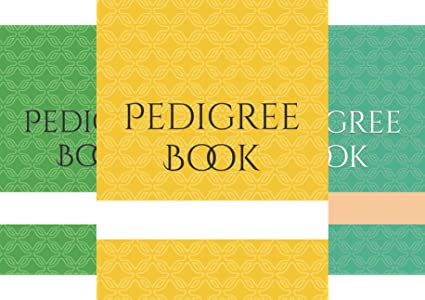
Pedigree Books now available

Pedigree Books now available!

Practical, economical, and beautiful bound paperback and hardcover books are now available for purchase on Amazon.com, .uk, .ca, .au.de, .fr, .es, .it.   These notebooks incorporate the horizontal pedigree charting tool posted to this blog in 2015 (now in a 8.5 x 11", 6-generation format). Designed to ensure key information about ancestors can be passed down in a stable, clear, format to descendants. These 108 to 110 page volumes easily accommodate very old lineages back to early historical periods from around the world. Recommended for documenting burial locations of ancestors, color-coding birth and death locations, documenting mtDNA and Y DNA lines, ancestral occupations, health conditions, etc. Handy field research book to keep in the car.

LOOK INSIDE to see the 99 Charts plus Notes Pedigree Book format
Also available in a 53 Charts (single-sided pages) Pedigree Book format


Thursday, 13 May 2021

The Girl in the Library


I've joined the club of genealogists who write mystery novels! This one is pretty 'cozy' and I hope it will appeal to everybody who likes golden age detective fiction as well as true crime. There are three libraries and a cemetery, time on a microfilm reader, and several dogs. Hope you check it out on Amazon (free preview available in most markets and free download via Kindle Unlimited; .co.uk, .com). UPDATE: Amazon Prime members can read for free (in Amazon Prime Reading) from June 1st until November 30th, 2023.

Friday, 11 December 2020

Genealogy Community Service: Breaking Brick Walls for Strangers


It is the end of an intractable year and this post is in the spirit of seasonal giving; no matter how stuck we get on our own family, we are all in a position to help others. Despite everything, 2020 had a few highlights for me, and unsurprisingly, almost all of them involved breaking down genealogical brick walls. However, only one brick wall was among my own ancestors (thank you to the National Archives UK for free downloads!). The others were cases where I came across the magical tidbit of evidence that broke through to further generations or specific origin locations for the ancestors of strangers.

In one case I was helping a fourth cousin by reading through NY land records and I came across a well described family group, with sons-in-law listed, in a very small town in frontier NY state in the early 1800s. I checked google and FamilySearch and discovered that one of the daughters was the most distant point on a FamilySearch one tree lineage. She had died in the midwest, birth location New York state, and her parents and hometown were unknown. The will I was looking at in a county land registration book proved who her parents and siblings were as well as her town of origin. I updated her profile on FamilySearch, adding the other relatives, and linking to the documentation.

In the same way a document with a detailed family group (particularly including in-laws) can link up people currently stranded on the tree without specific origin information, researching cemetery plots often reconstructs more complete family groups (a better and more distinctive entity to research than an individual) and thereby enables the research identifying their origins. In the best case scenarios a gravestone or cemetery registry includes birth location, even when all other records do not. I do comprehensive research for specific cemeteries on FindAGrave and many origin towns in England, Scotland, and Ireland were successfully identified and publicly posted on the FamilySearch one tree and FindAGrave this year. In one case someone submitted an edit request that did not look right, and in researching and checking what was going on, the US and English origins of two separate Ontario families was solved and posted for their descendants to see.

Inevitably, we come across evidence that is not relevant to our own trees but we may have dug up someone else's treasure. If you are reviewing an obscure or difficult to access source, keep an eye out for information that might break any brick wall; whenever a family group is described with any differentiating detail, it is good to search for them on the FamilySearch tree (https://www.familysearch.org/tree/find/name) and on FindAGrave and to add the information you have uncovered. For people not yet on the tree, it can take a few minutes of research to look for members of a more recent generation and then to build backwards, but it is worth doing. Some of my most positive genealogy interactions in this otherwise terrible year came about because of a few extra minutes of work here or there that made all the difference to another genealogy community member.

Best wishes for all in 2021!

Tuesday, 5 June 2018

DNA test your Irish-descended elders, before it is too late

Recently, a genealogist with a brick wall at an emigrant Irish ancestor born in the 1840s posted to a group seeking advice on getting documentation to reveal his specific origins. As usually happens, the ancestor had a very common Irish name and nothing in US records was particularly specific about where he came from. Given the general scarcity of documentation capable of resolving these situations, suggestions quickly turned to autosomal DNA testing. The original poster indicated she had heard of DNA testing, but was not sure about doing it herself.

Such reticence can eliminate, forever, the chance of breaking through brick-walls at this typical Irish emigrant timescale.

Realistically, autosomal DNA testing is the best tool for connecting an Irish immigrant to his or her origin family and townland back in Ireland, given the preponderance of common names in Ireland and the typical lack of specific birth locations on later-life records in many destination countries. And, for it to work, we really need to test the great-great grandchildren of those who were born in Ireland in the period just before and after the famine. Some of these 2x great-grandchildren are still with us.

There are technical and practical reasons for this.

For diaspora researchers, once census, marriage, death, and obituary record leads have dried up, what can work -- and work very well -- is discovering a second or third cousin match at one of the DNA testing companies who happens to have more information than you do.

Someone who matched at predicted third-cousin level to an Irish-descended elder in my family knew she had a line leading back to a Mary (with a very common Irish surname) who married a Patrick (with an even more common surname) both of Ireland, whose daughter came to NY. Mary and Patrick were born in the 1840s. Mary's surname matched with an Irish line that we know a lot about -- one we are still in contact with back in the Old Country. Our family therefore has an unusual amount of knowledge well beyond what is recorded in expected documentation. We've also gone through parish records from the 1820s forward and plucked out the baptisms and marriages that we know from locations, dates, witnesses, and naming patterns belong to our family. Where possible, we have down-traced using records combined with the memories of elders about first and second cousins they met in passing as children in the 1930s, further filling in this tree.

Mary's name and surname, once given to me by the match, was of obvious immediate interest, and I checked my database and discovered we did indeed have a 2nd great aunt who had married a Patrick with the given surname. The resulting relationship was consistent with the DNA shared and it was clear we had figured out the Most Recent Common Ancestor within minutes. The match got to add three more generations and many cousins to her tree.  Mary and Patrick had married and moved away, and their children had gone even further, to upstate NY and then California, and so for us, this was really the only way to gain knowledge of what happened to her descendants.

Now, we were particularly lucky to have the two names of a couple to work with, and that Mary had married in her home parish (as expected) so that her husband's name was already in my database. While it would have been trickier, it still would have worked if we had only her name to go on. However, what likely would not have worked was if we waited to test the grandchild of either of the actual DNA testers. This is why:


Given that the probability the DNA tests can detect a cousin relationship drops off precipitously at the fourth cousin-level, waiting another generation or two is disastrous for solving these kinds of problems.

Additionally, looking at the estimated birth years in the above graphic, and taking into account the general history of Irish emigration (heavy starting in the mid 1800s) it is particularly important to test Irish diaspora descendants born in the 1920s and 1930s while we still can.

Once the elder generation has tested, it can take time for the autosomal DNA testing to bear fruit. For the first five years or so, I found it very slow going. However, so many more people are testing now, and some of them have good information, that we are generating results much more frequently and quickly. Once one Most Recent Common Ancestral couple is determined, that information becomes useful in figuring out potential relationships with other people who share that segment. And when people post the best trees that they can with their DNA testing profile, the linking can go like lightning.

The frustrating ambiguities inherent in researching immigrant ancestors who came from "Ireland" and often shared their name and birth year with many thousands of their countrymen persists. However, if one branch of the family happens to have knowledge going back 200 years and tests their descendants they can then help likely matches from other branches figure out how they fit in.

Large Irish families actually increase the odds of being able to sort it out (eventually) because all you need is for one branch to have remained relatively well established and documented. While all the other siblings may have dispersed around the world and to locales with next-to-useless documentation, if you can still test people in the needed senior generations, the match will show up and hopefully the pieces will then fit together. We found that good documentation happened with the eldest male branch which remained in Ireland, and then with the extended NY family that established itself in an around Brooklyn and still holds family reunions.

UPDATE, in the two years since this post was originally published in 2018, both of Catherine' and Margaret's descendants showed up on Ancestry and 23andme, filling in what happened to these branches and linking their descendants back into the family

If we can piece together the family groups that constituted the population of Ireland throughout the nineteenth century, we may then be able to take it back even further. If we do not test Irish descended elders born in the 1920s and 1930s while we still can, this possibility will evaporate.